


Pooking - Billiards City
MOUNTAIN GAME
I spent time with Pooking - Billiards City as a casual sports game, and its appeal became clear very quickly: it turns a familiar game of pool into short, low-pressure sessions that are easy to start and easy to stop. The table, cue, and target balls are immediately understandable, so I never had to learn a complicated control system before taking my first shot. At the same time, good results depend on more than simply pointing at a ball. Angle, power, position, and patience all matter.
That balance is why I can recommend it to someone who wants a relaxed mobile billiards game rather than a full simulation. It is free to play, suitable for Everyone, and developed by MOUNTAIN GAME. Its popularity is substantial, with over 500 million installs and a 4.6 average from around 3.6 million ratings. Those figures do not make every part of the experience perfect, but they do reflect how accessible the basic format is.
How the everyday pool routine works
My usual session starts with a simple goal: play a few shots without treating the game like a serious tournament. The single-player format makes that especially convenient. I can open it during a short break, complete a small stretch of play, and leave without needing another person to be online or available. That makes it a better fit for irregular play than a multiplayer-first pool title.
Related News

Basketball Stars: Multiplayer Dominates Mobile Sports Gaming

Mastering Carrom Pool: A Strategic Mobile Game Adventure

Why Head Ball 2 - Online Soccer Is Dominating Mobile Gaming
The controls are built around lining up the cue and deciding how hard to strike. This sounds basic, but the useful habit is to separate those two decisions. I first look at the contact point and the likely path of the object ball. Only after the angle looks sensible do I adjust the strength. When I rush both actions together, I tend to overhit easy opportunities and leave the next shot in an awkward position.
The relaxed presentation also changes how I approach mistakes. A missed shot usually feels like a small lesson rather than a major setback. I pay attention to whether I missed because the line was wrong or because the power was excessive. That distinction helps me improve without turning a casual game into a frustrating exercise.
Related News

Why WhatsApp Messenger Still Makes Everyday Communication Feel Easy

Jurassic World: The Game Is the Better Dino Tycoon for Strategic Players

Threads in Real Life: Who Should Join, Lurk, or Leave

How SHEIN Turned Shopping Into an Endless Content Feed

How to Make Fortnite Feel Smarter on Mobile

Should You Switch to Microsoft Outlook on Mobile?
One realistic use case is a ten-minute wait at a station or in a reception area. I can play a few attempts, pause my attention naturally, and return later without needing to remember a complex storyline or a large set of rules. Someone looking for a calm distraction will probably appreciate that rhythm more than a player who wants a deep competitive ladder.
What makes the basic loop satisfying
The best part of the loop is the immediate relationship between intention and result. If I choose a clean angle and moderate force, the outcome generally feels understandable. That gives each shot a small puzzle-like quality. I am not only trying to pocket a ball; I am trying to leave a sensible position for what comes next.
I found it helpful to treat the cue ball as the real focus. Beginners often watch only the ball they want to pocket, but the cue ball determines whether the next shot is comfortable. Even without advanced techniques, choosing a slightly less ambitious pocket can be smart if it leaves the table open. This is one of the first habits that separates steady play from random tapping.
Gallery
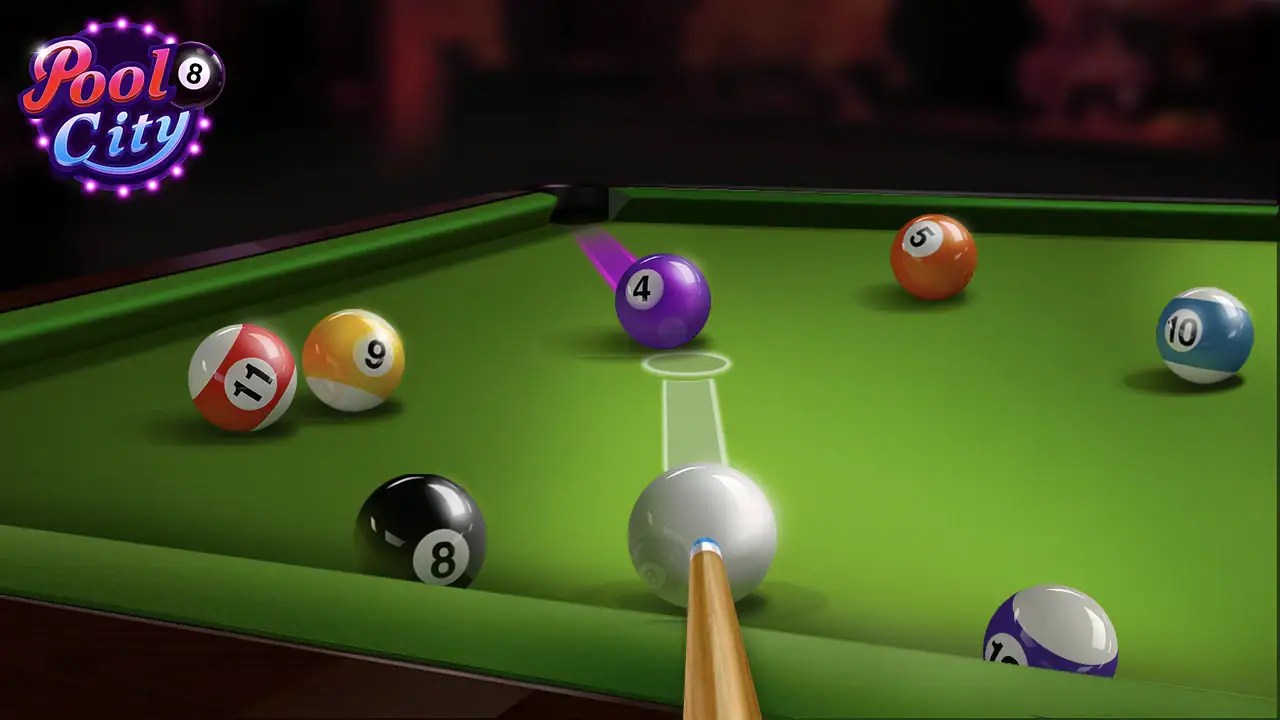
The game works especially well for people who enjoy repetition with gradual improvement. A player can return to the same type of situation and make a cleaner decision the next time. It is less suitable for someone who needs constant novelty, a story, or a large social layer to stay interested. The core activity remains billiards, and its strength is the simplicity of that focus.
Settings and small adjustments worth checking
Before settling into longer sessions, I recommend checking the available control and presentation settings rather than accepting the initial setup automatically. The useful question is not whether a setting looks impressive, but whether it makes aiming and timing more comfortable on your particular phone. A control layout that feels fine on a large screen may feel cramped on a smaller one.
I also pay attention to sound and visual feedback. Pool games rely on small cues: the contact between balls, the cue strike, and the sense of a successful pocket. Some players will enjoy those sounds as confirmation, while others may prefer a quieter session in public. Adjusting the audio to match the situation is more practical than playing every session with the same setup.
Screen brightness and touch precision matter more here than they might in a turn-based puzzle. If the display is dim or my finger is covering the aiming area, I make poorer judgments even when I understand the shot. Cleaning the screen and using a comfortable grip can be surprisingly helpful. These are not special tricks inside the game, but they improve the consistency of the controls.
Another useful adjustment is mental rather than technical: I avoid changing the aiming approach halfway through a shot. I line up first, check the intended contact, and then apply power in one deliberate movement. This repeatable routine reduces accidental swipes and makes it easier to identify whether a mistake came from judgment or execution.
The current version is 1.0.166, and the game supports devices running Android 6.0 or later. That broad compatibility is helpful for people using an older Android phone, although the experience can still vary with screen size and touch response. I would not choose a device solely for this game, but its requirements are not demanding for many existing phones.
Faster patterns that improve ordinary play
Experienced play in a simple pool game is often less about dramatic trick shots and more about removing unnecessary decisions. I use a quick scan before every attempt: identify the easiest useful ball, check where the cue ball is likely to finish, and only then consider a more ambitious option. This prevents me from chasing a difficult pocket when a safer route keeps the table manageable.
A second habit is to avoid maximum power unless the table clearly demands it. Strong shots can look attractive, but they give me less control over where the cue ball stops and can turn a straightforward position into a difficult one. Medium force is usually easier to repeat. When I do need more strength, I make that choice because of the layout, not because the shot feels exciting.
I also try to think one shot ahead without pretending I can control everything. If two balls are available, I prefer the option that leaves a wider area for the cue ball. A technically successful pocket is not always the best result if it traps the cue ball behind another ball or near a cushion. This is a small strategic difference, but it makes the game feel much more deliberate.
When a shot fails, I do not immediately repeat the same motion. I change one variable. I might keep the angle and reduce the strength, or keep the power and alter the line. Changing several things at once makes it impossible to learn from the attempt. This one-variable approach is a practical way to improve during short sessions.
Another repeatable pattern is to use the edges of the table carefully. Cushions can open a route when a direct line is blocked, but they also magnify small aiming errors. I treat a bank shot as a planned alternative, not as a rescue attempt after losing patience. If the direct option is available and leaves a reasonable next position, it is usually the better everyday choice.
Where the relaxed design reaches its limits
The same simplicity that makes the game approachable can limit long-term depth for advanced players. Someone seeking a detailed billiards simulator may want more control over spin, more formal rule variations, or a stronger competitive structure. I would not choose this title expecting the precision and breadth of a dedicated simulation. Its identity is closer to accessible arcade pool with a calm single-player rhythm.
That does not mean skilled players have nothing to do. There is still room to improve shot selection, power control, and cue-ball awareness. However, the ceiling is shaped by the tools and modes the game presents. If your enjoyment comes from studying professional technique in minute detail, another pool game may suit you better. If your priority is quick practice without a heavy learning curve, this limitation becomes less important.
There is also a monetization point to keep in mind. The game is free, with in-app purchases ranging from $0.99 to $4.99 per item. I can understand why optional purchases may appeal to players who want to progress more comfortably, but I would approach them cautiously. The most valuable improvement in my sessions came from better decisions, not from spending. Anyone who dislikes in-app purchase prompts or prefers a single upfront price should consider that before installing.
The age rating is Everyone, which matches the straightforward sports presentation and makes it a reasonable choice for a broad audience. Still, parents should remember that a free mobile game with optional purchases can deserve the same purchase-awareness as any other app. The content is easy to understand, but the spending side is worth handling deliberately.
Another limitation is that relaxed play can become repetitive. The core pleasure comes from making shots cleaner and more controlled, not from a constantly changing set of activities. I would skip it if I needed a game that continually introduces new mechanics or offers a rich narrative. It is better viewed as a dependable pool table in your pocket than as a large all-purpose sports package.
Who should install it and who should pass
I think this is a strong match for casual players who enjoy billiards but do not want to arrange a real game every time. It is also useful for beginners who want to learn the relationship between angles and power in a forgiving environment. The short-session format suits commuters, people taking breaks between tasks, and anyone who likes a quiet game that can be picked up without preparation.
It is less convincing for players whose main goal is live competition against friends. The single-player emphasis is central to the experience, so it should not be installed with the expectation of a social pool room. Likewise, serious billiards enthusiasts may find the arcade approach too limited if they want highly technical shot control and a more exact simulation of real-world play.
For a first session, I suggest playing slowly instead of trying to clear the table quickly. Watch where the cue ball finishes, notice how different power levels affect the result, and build a consistent aiming routine. After that, use short repeat sessions to test one improvement at a time. This approach gives the game more staying power than simply tapping through shots as fast as possible.
My verdict after building a repeatable routine
Pooking - Billiards City succeeds because it understands the value of an uncomplicated pool session. The controls are approachable, the single-player format is convenient, and the relaxed style makes it easy to return for a few shots without making a large commitment. MOUNTAIN GAME has created a sports game that is welcoming to newcomers while still rewarding players who develop better habits.
Its weaknesses are equally clear. The relaxed arcade design will not satisfy everyone who wants a full billiards simulation, and the free-to-play structure includes optional purchases from $0.99 to $4.99 per item. Repetition may also become noticeable if you need constant new content. Those are meaningful trade-offs, not reasons to dismiss the game entirely.
My final recommendation is simple: install it if you want accessible, single-player pool that fits naturally into spare moments. Use moderate power, think about the cue ball, change one variable when a shot fails, and check the controls so they suit your device. Skip it if competitive multiplayer, advanced simulation, or a purchase-free experience is more important to you. For everyone else, this is a polished way to turn a few idle minutes into a small, satisfying test of aim and patience.
FAQs for Pooking - Billiards City
What is the main gameplay objective in Pooking - Billiards City?
Pooking - Billiards City is a single-player billiards game where the main objective is to clear the table by pocketing all the balls. The game combines realistic physics with a variety of challenging levels. Players progress through different cities, unlocking new challenges and tables as they improve their skills.
Is Pooking - Billiards City free to play, and does it have in-app purchases?
Yes, Pooking - Billiards City is free to download and play on both Android and iOS platforms. However, it does offer in-app purchases that allow players to buy cues, remove ads, and gain other benefits. While the game can be enjoyed without spending money, these purchases can enhance the gaming experience.
How realistic are the graphics and physics in Pooking - Billiards City?
Pooking - Billiards City features high-quality 3D graphics that provide a realistic billiards experience. The physics engine is designed to simulate real-world pool mechanics, offering players a lifelike feel when shooting and aiming. This realism enhances the overall gameplay, making it a favorite among billiards enthusiasts.
Are there any multiplayer options available in Pooking - Billiards City?
Currently, Pooking - Billiards City is a single-player game focused on solo gameplay. It does not offer a multiplayer mode. The game is designed to challenge individual players with progressively harder levels, allowing them to hone their skills at their own pace without the pressure of competing against others.
What are the system requirements for Pooking - Billiards City?
Pooking - Billiards City is designed to run smoothly on most modern smartphones. For Android users, a minimum of Android 4.1 is required, while iOS users need at least iOS 9.0. The game is optimized for performance, ensuring it runs well even on devices with modest specifications.
Pros
- Realistic physics enhance gameplay.
- Visually stunning and vibrant graphics.
- Intuitive controls make it easy to play.
- Wide variety of challenging levels.
- Offline mode available for on-the-go play.
Cons
- Ads can be frequent and intrusive.
- Limited multiplayer features available.
- No option to customize cue sticks.
- Progression may feel slow for some.
- Requires in-app purchases for premium content.


